
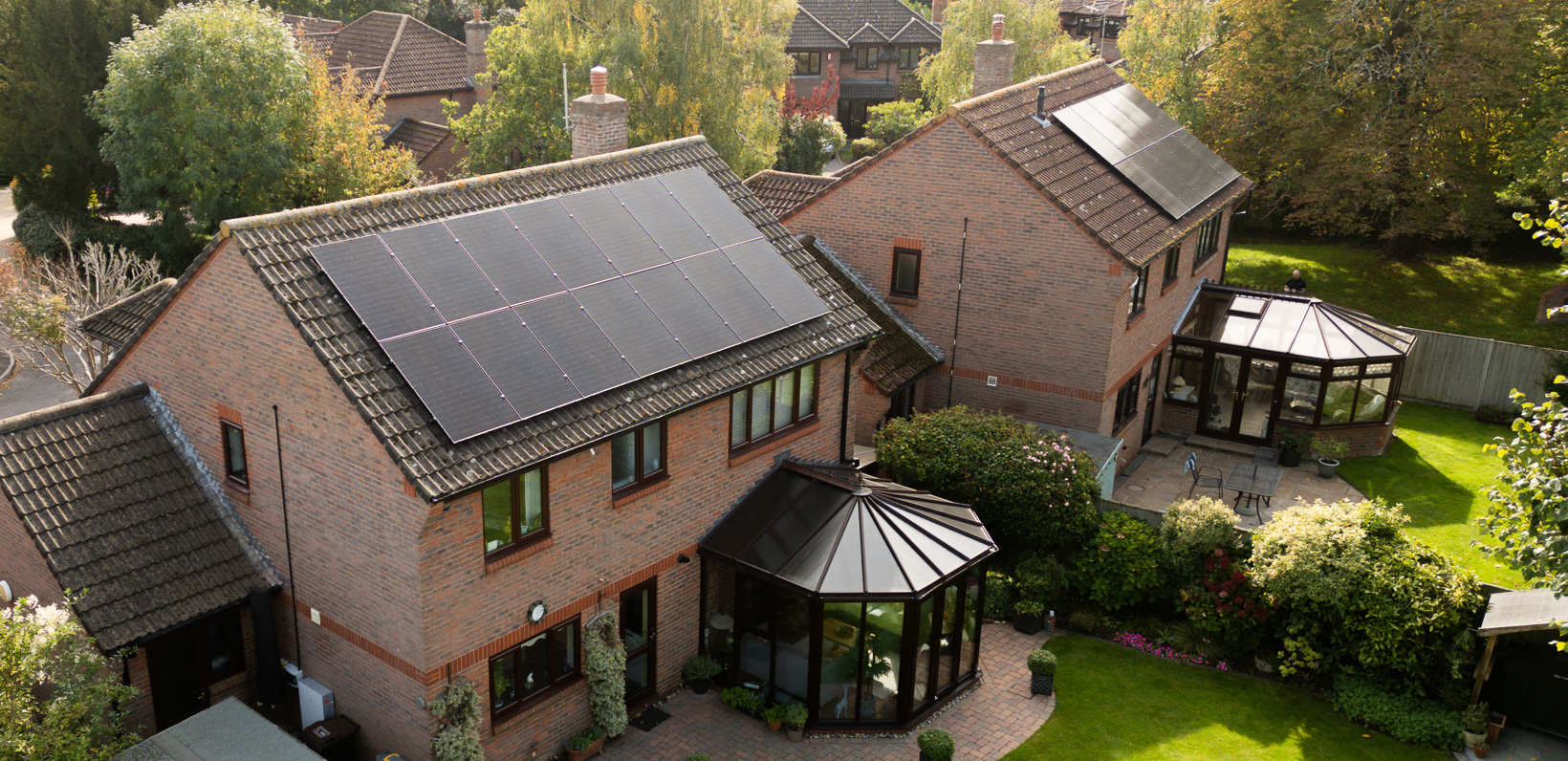
One of the first questions people ask when considering solar energy is how many solar panels do I need to cover household electricity use?
The answer depends on your energy consumption, the available roof space, which way they are facing, and the efficiency of the panels you choose. While online calculators can give a starting estimate, it helps to understand the key factors so you know what will work best for your property.
In this article, we’ll look at how system size is calculated and what this means for different types of homes.
How Many Solar Panels Do I Need To Power My House?
The number of panels needed to power a home depends on the household’s average electricity use. A typical UK household consumes around 2,900 kWh of electricity per year, which can usually be met with a system of 8 to 12 panels, depending on panel efficiency and roof orientation. Larger homes with higher usage will require more panels, while smaller households may need fewer.
It’s also important to consider energy use patterns. Homes that consume more electricity during the day may make better use of direct solar generation, while those with higher evening use often benefit from adding battery storage to their system, allowing surplus electricity produced during the day to be stored and used later, reducing reliance on grid power.
How Many Solar Panels Do I Need For A 2 Bedroom House?
Most two-bedroom homes in the UK have moderate electricity use, so a system of around 6 to 8 panels is often enough to meet annual consumption.
The exact number depends on the type of panels installed and how efficient they are at converting sunlight into electricity.
Smaller properties may also have limited roof space, so panel choice and layout are important in achieving the right balance between available area and output.
How Many Solar Panels Do I Need For A 3 Bedroom House?
Three-bedroom houses typically require more energy than smaller properties, especially if multiple occupants are using appliances, lighting, and heating systems. A system of around 10 to 12 panels is usually recommended, producing enough power to cover the average household’s yearly usage.
Homes with high energy demands, such as electric heating or EV charging, may require additional panels or the integration of a battery to maximise efficiency.
How Many Solar Panels Do I Need For A 4 Bedroom House?
Larger homes often have higher electricity consumption due to more occupants, greater floor space, and additional appliances. A system of 12 to 16 solar panels is often needed to meet energy requirements in a four-bedroom house.
Roof space plays a bigger role here, as fitting a larger array requires sufficient area and suitable orientation. If roof space is limited, high-efficiency solar panels can be used to generate more power from a smaller footprint.
Other Factors That Influence System Size
Although the size of your property gives a useful estimate, the real calculation depends on energy usage and the efficiency of the equipment.
South-facing roofs generate the most electricity, and shaded or north-facing roofs produce less. The type of solar panel also makes a difference, as newer models tend to produce more power per square metre, and adding a solar battery can improve system performance, especially for households that use more energy in the evenings.
How Long Do Solar Panels Last?
Solar panels typically last 25 years before their efficiency begins to decline noticeably. Most manufacturers provide 25 year warranties, with a performance warranty of 0.4% or less degradation per year, so even after two or three decades panels usually continue to produce electricity, though at a reduced output.
Factoring in this long lifespan is essential when working out how many panels to install, as the system will continue to generate energy for many years once the initial investment is made.
Choosing The Right System
The number of solar panels you need depends on property size, household electricity use, and available roof space. Smaller homes may need fewer panels, while larger properties often require bigger systems to match their demand.
To find out exactly what works for your home, the best approach is to arrange a site survey with an experienced installer. This ensures your system is designed around your usage and property layout, delivering the right balance of performance and cost.
If you’d like tailored advice and a clear installation quote, contact our team who are more than happy to help.